
Why outdoor fixtures fail at the gasket, not the LED
Most field returns we see on landscape lighting have a working LED inside. What gave up was the seal around it — and that is decided long before assembly, at the mould.
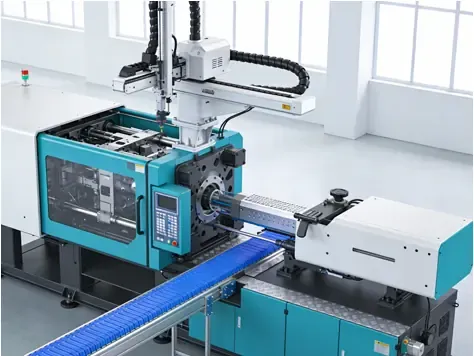
An LED rated for 50,000 hours will happily outlive the fixture it sits in. When a bollard or an in-ground uplight comes back from the field after two winters, the diode is almost never the problem. Water is. It gets in through a gasket that has taken a compression set, a cable gland that was never torqued to spec, or a parting line that sits a few hundredths of a millimetre proud.
None of those are assembly mistakes in the usual sense. They are design and tooling decisions that only show up after a few hundred heat cycles.
Where the water actually comes from
A sealed housing breathes. It warms up when the lamp is on and cools when it is off, and every cycle pulls a little air — and whatever moisture is in it — past the weakest seal. Three places account for most of what we see:
- The lens-to-body gasket, when the groove is too shallow for the durometer that was specified.
- The cable entry, when the gland seals on the jacket but the jacket itself wicks water along the conductors.
- Screw bosses that crack the first time a field technician over-tightens them.
If the groove is wrong in the tool, no amount of care on the assembly line will make the gasket seal for ten years.
What we check before the steel is cut
During the DFM review we model the gasket compression at both ends of the tolerance stack, not just at nominal. We ask for the real cable, not a drawing of it, and we pressure-test the first shots from the tool before anyone signs off the texture.
- Compression between 20% and 30% at worst-case tolerance.
- A breather membrane wherever the housing volume is above 150 cm³.
- Air-tightness test on every unit, with the result stored against the serial number.
It adds a few days to the front of a project. It removes most of the reasons a fixture comes back.